What is Classical Mat Pilates beyond the 34 original Pilates exercises?
/If you know Classical Mat Pilates as the 34 original exercises, keep reading to discover more about it. You might be surprised.
Hint: Return to Life, Book (1945) is just one very important piece of a much bigger picture.
One of the biggest misconceptions is that Classical Mat Pilates is only those 34 exercises. But a comprehensively trained classical Pilates teacher learns and teaches far more than 34 movements. In the Romana lineage today, Mat work includes more than 60 exercises, from the Hundred through to Seal and Pilates Push-Up alone.
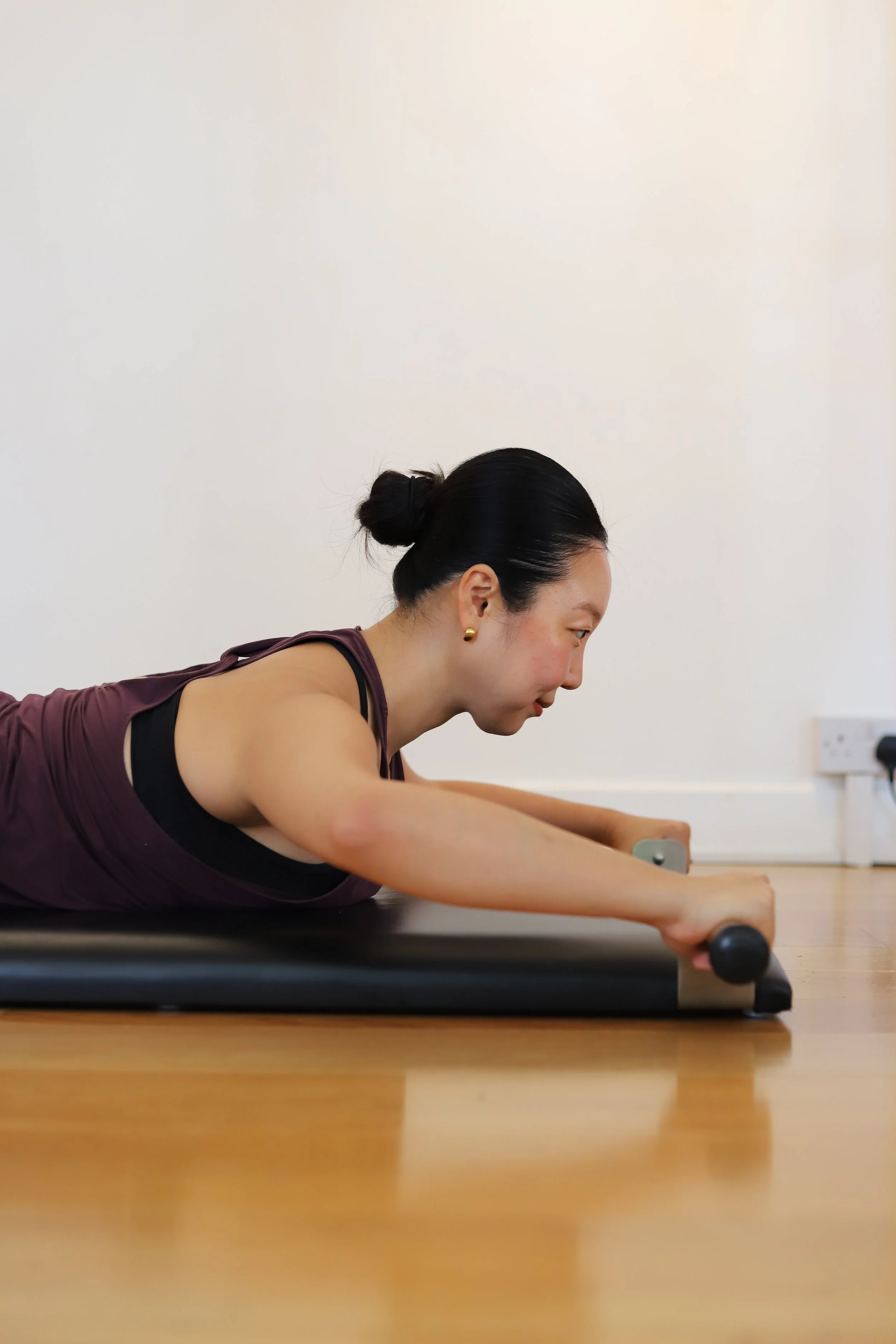
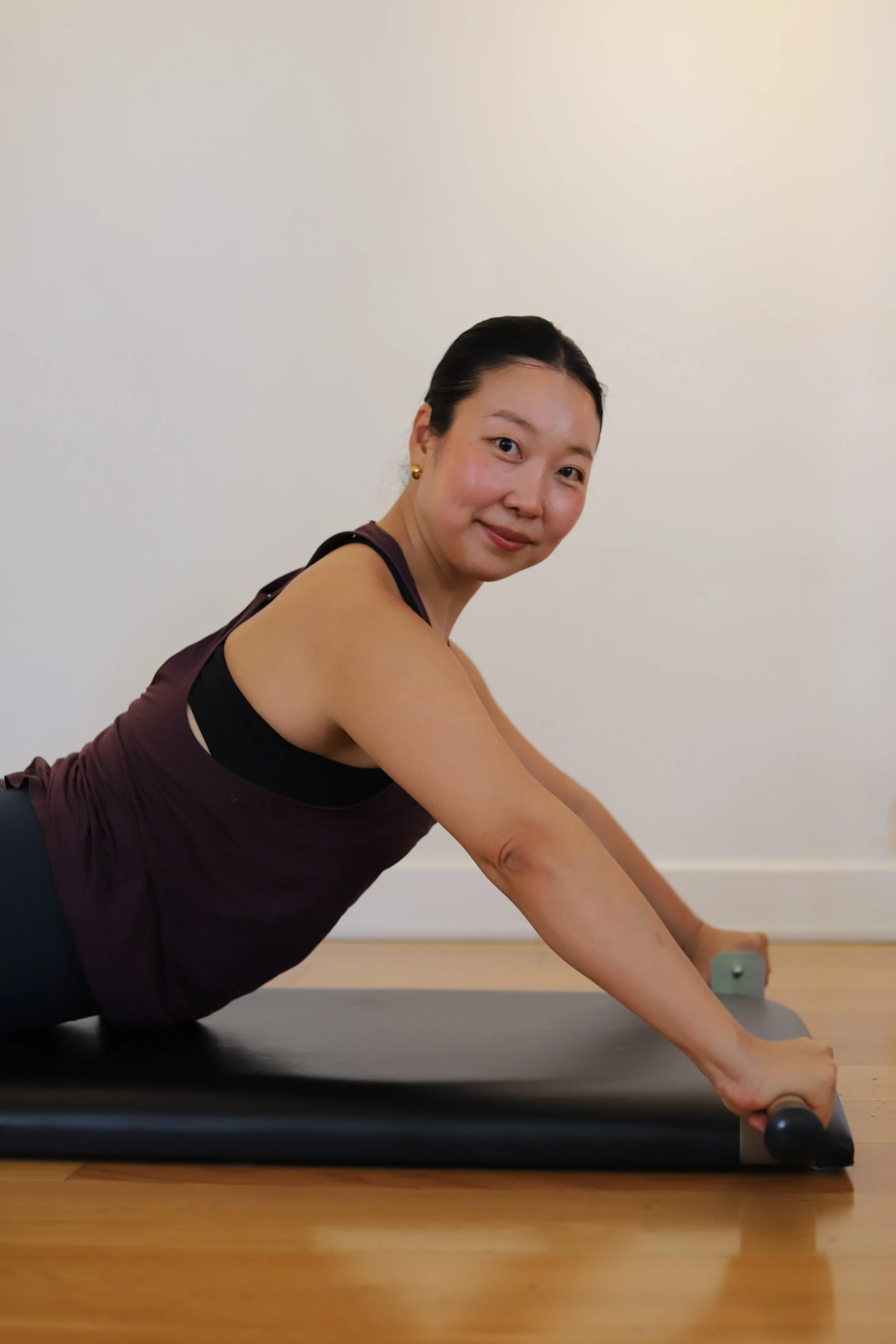
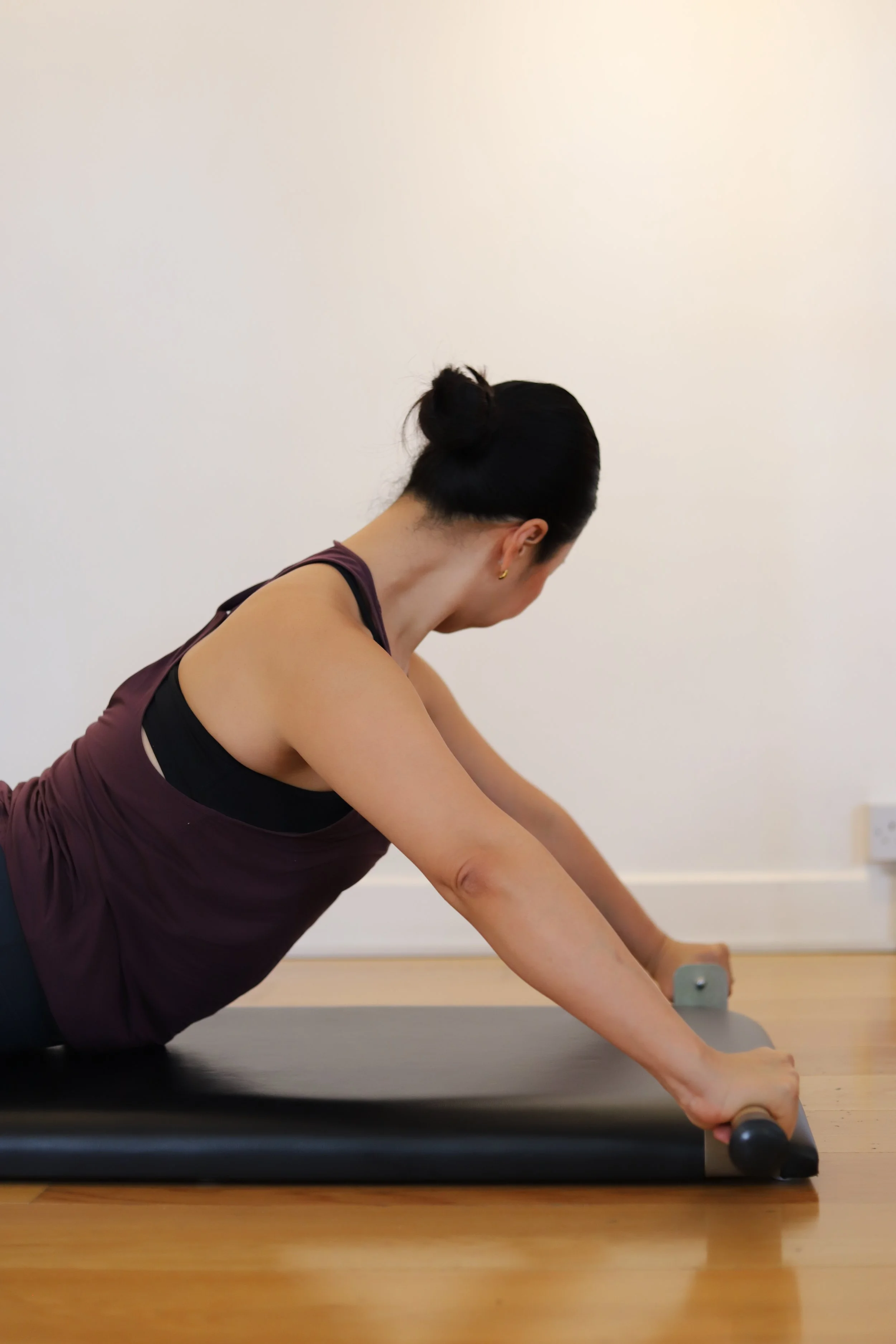
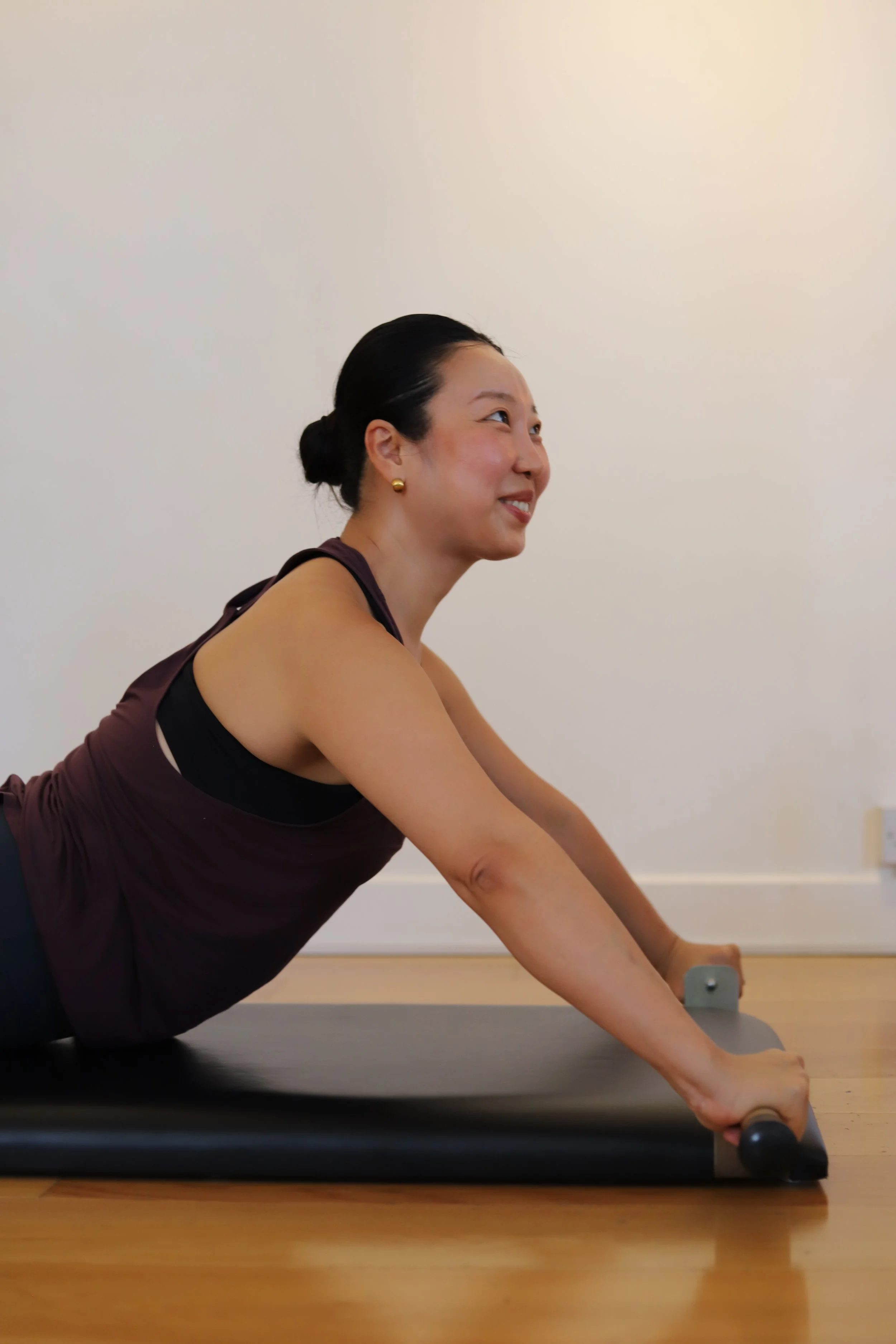
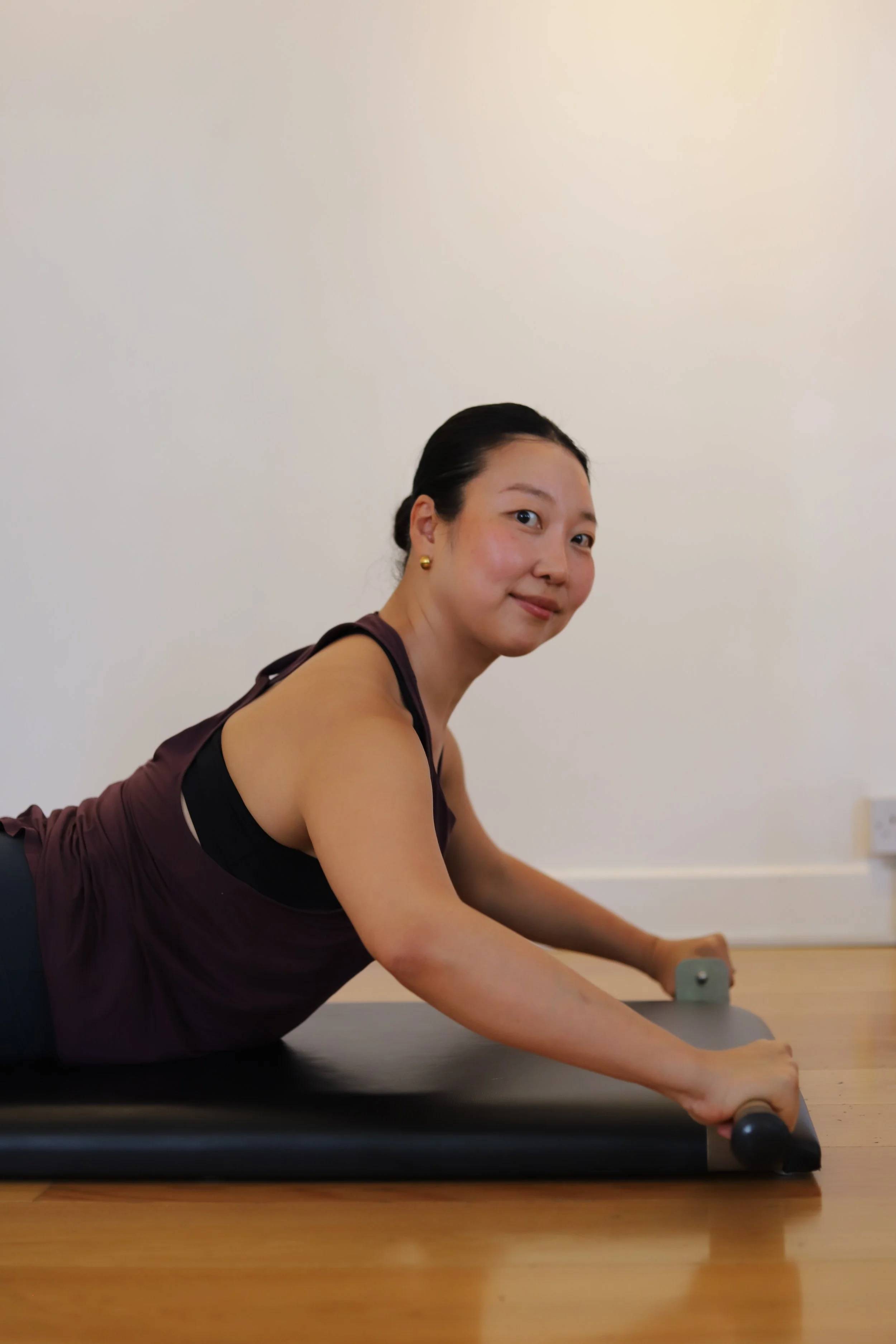
Here is an exercise called - Neck Roll as demonstrated by one of our dedicated teachers - Minji. Romana Kryzanowska created this exercise to prepare people for for a more advanced exercise - Swan dive.
Mat classes are never identical.
Our understanding, interpretation and teaching of Classical Mat work have expanded enormously over the decades, while staying true to Joseph Pilates’ original method of Contrology. It has evolved through generations of dedicated teachers, students and apprentices around the world.
Different class levels require different exercise selections, order variations, teaching strategies and progressions, because not every body needs the same pathway.
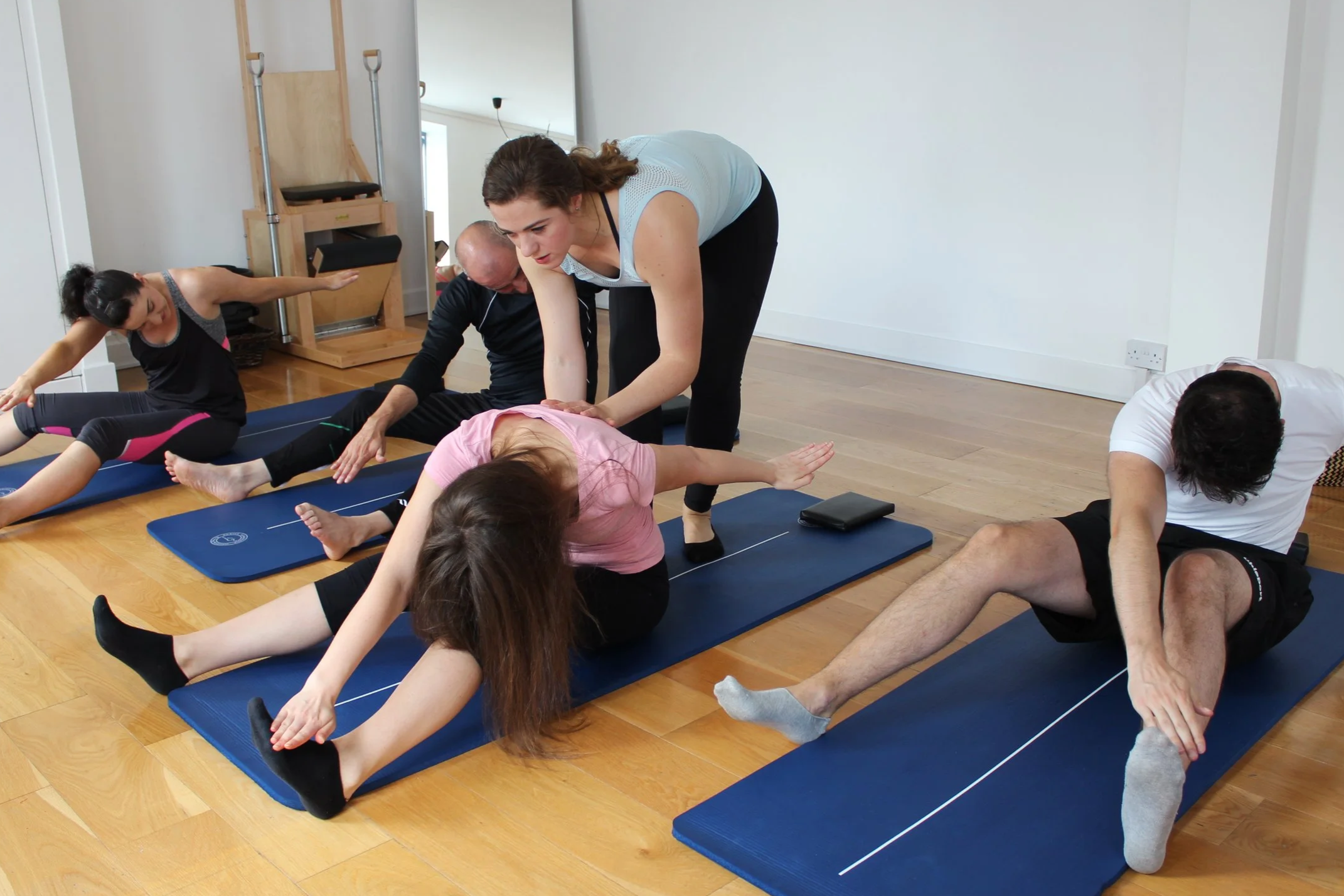
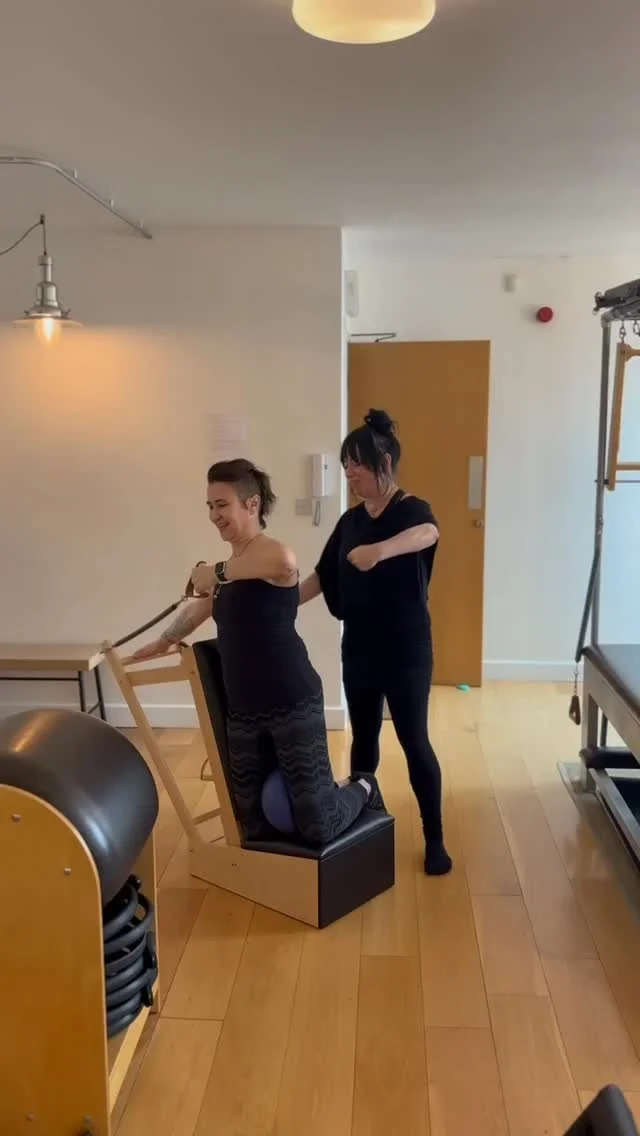
teaching a mat exercise called the saw
Almost always, the body needs to warm up first. We often don’t launch straight into an advanced version of the Hundred, as pictured in the 1945 book, with the legs at eye level. A comprehensive classical education teaches multiple ways of building towards the Hundred alone, so that each student learns how far and where they can take their Hundred on any given day.
I wanted to highlight and share this because, depending on the training pathway you’ve been exposed to, you might be left with the impression that 34 exercises are all there is — unless you go contemporary or introduce other fitness modalities and tools into your classes (which, in itself, is entirely your choice).
The Classical Method is far richer, bigger and more expansive than that. Don’t let anyone limit your learning.
Beyond the Traditional Mat Order
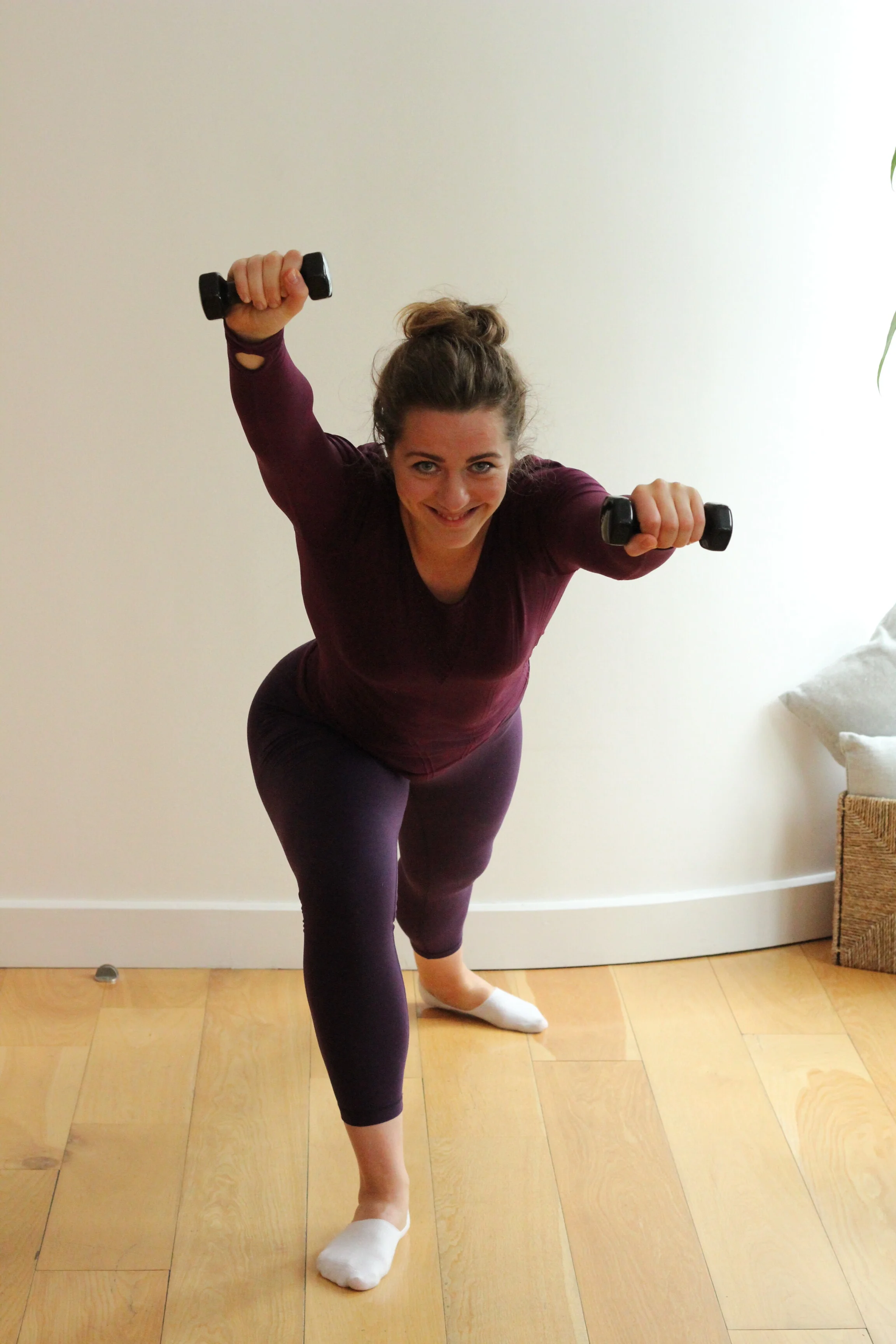
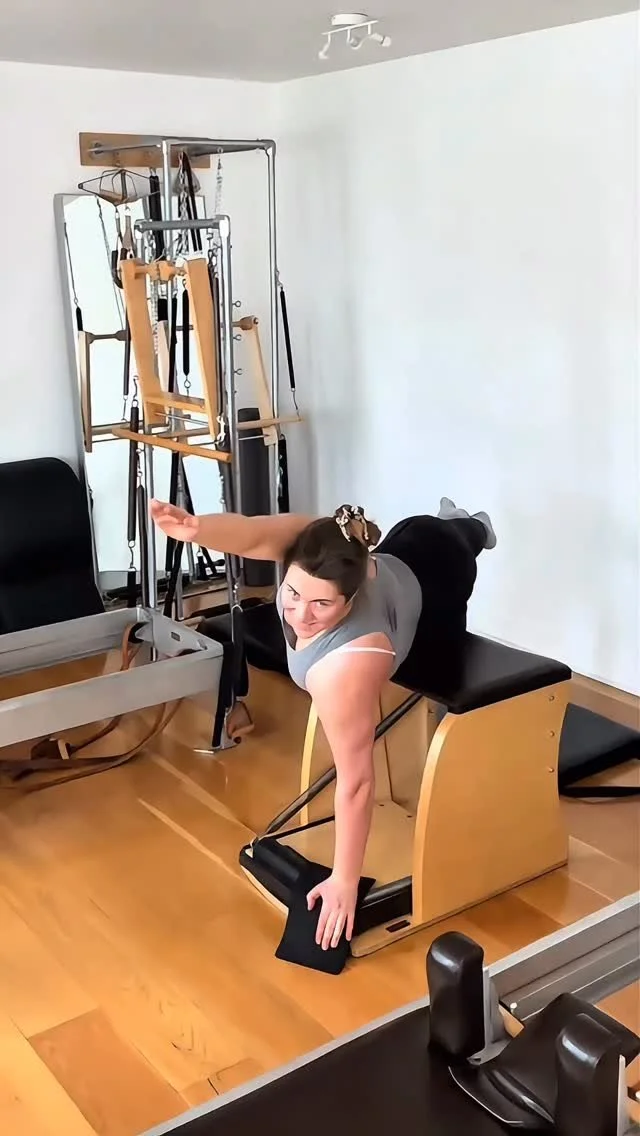
Fencing with arm weights
demonstrated by me, Vlada
You’ll find:
Countless warm-ups and finishes
Standing and moving-about exercises
Dozens of Pre-Pilates strength builders
Towel work
Magic Circle work
Hand weight work
Wall exercises
“Reformer on the Mat” and other playful combinations created by elder teachers, Romana’s “mini Mat” & a lot more from Romana’s students.
Preparatory exercises and progressions
And that’s still only a part of it all…
The Wider Pilates System
Exercises and concepts from the wider original Pilates system often find their way into Mat programming, too. For example, the Elephant, which we often see in archival footage of Joseph Pilates. And then there are the transitions — which can practically be a set of exercises in themselves.
The Mat work doesn’t exist in isolation. It belongs to a much bigger structure, method and practice.
Teachers Aren’t Simply Following a Script
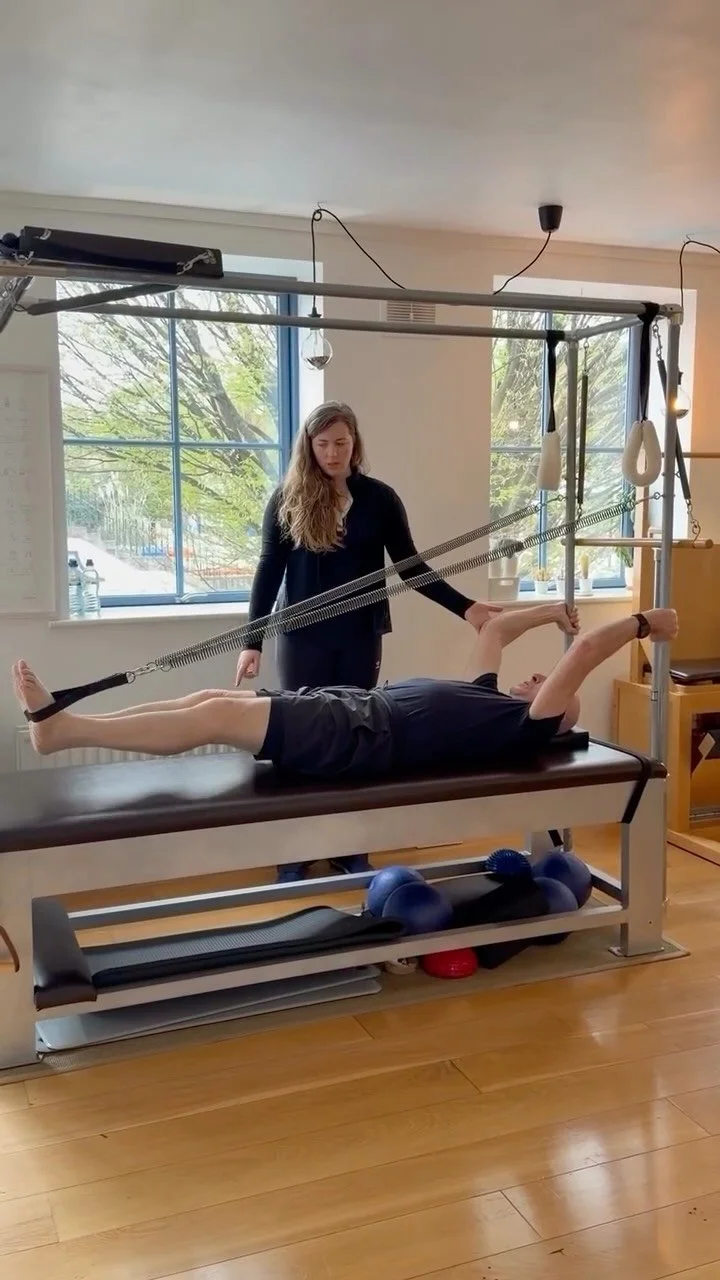
As we complete our one and a half year in person teacher training apprenticeships of 600-800 hours, we learn to:
Omit or add exercises and use variations and appropriate modifications
Break complex skills into manageable steps
Build useful preparations and progressions
Create purposeful drills to help a student reach an exercise
Most importantly, and I personally & humbly think that’s where Romana’s teacher stand out too - we learn to inspire and bring personality to the experience, helping you feel great and capable of taking on anything
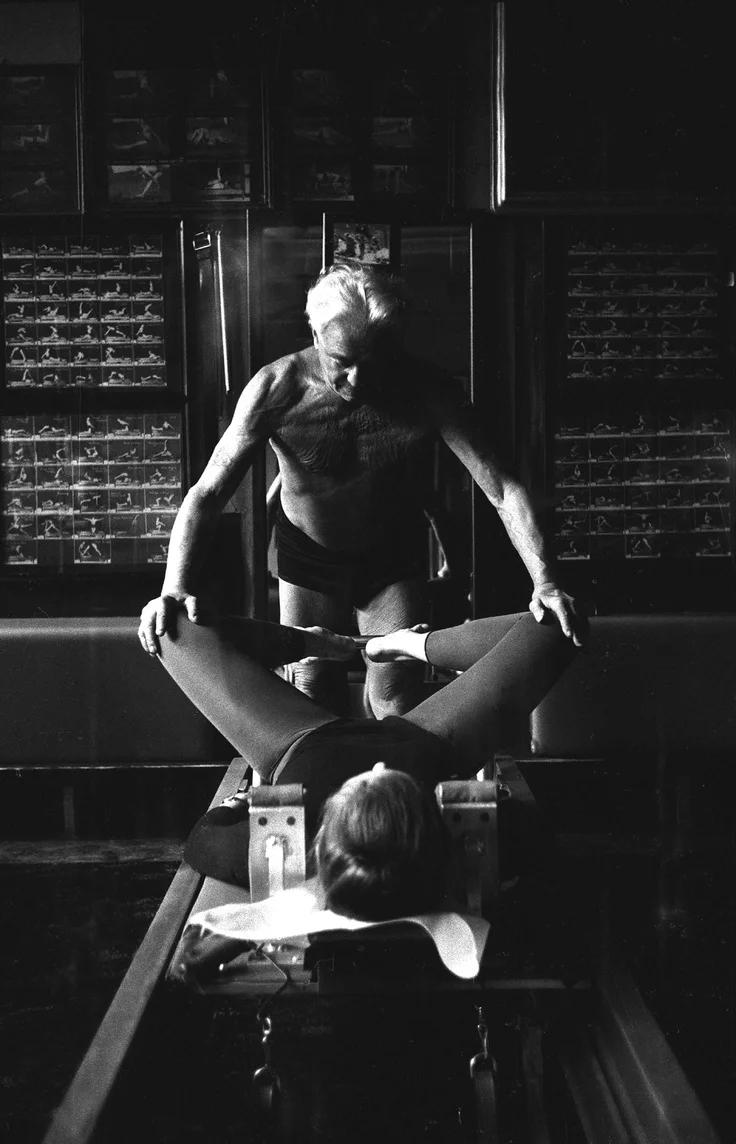
Joseph Pilates wasn’t teaching from a script either…
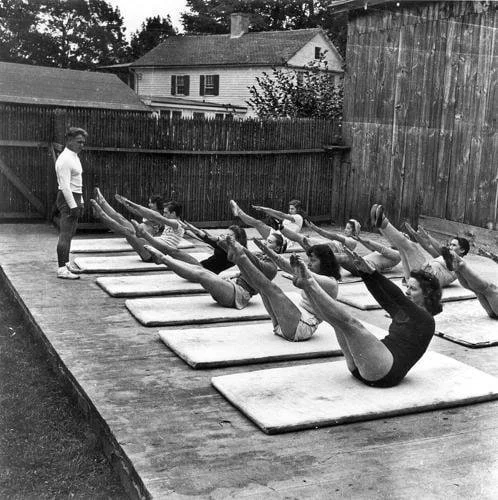
joseph pilates teaching at jacobs pilllow dance camp
I once attended a workshop at Jacob’s Pillow in the USA, where notes from one of the dancers who had been taught there by Joseph Pilates were read aloud. Fascinating! There were so many fun variations, too. He was such a character! And perhaps that’s part of why his work continues to reverberate around the world to this day. His personality, energy and approach to movement were as distinctive as the method itself. Decades later, Pilates has travelled far beyond its original roots, inspiring countless interpretations, adaptations and new directions. The conversations, trends and different versions of the work are as loud as ever — a testament to just how much this extraordinary system continues to capture people’s imaginations. And yet, beneath all the noise, there is still so much to discover in the original work itself.
The method had structure, but it was never lifeless.
There’s rhythm, variation, experimentation and plenty of personality.
Classical Teaching Is More Than an Exercise List
There are layers within every exercise:
Particular “whys” behind the exercises
Specific dynamics and rhythm
Breath
Chains of muscular engagement
How one exercise prepares you for another
How transitions connect the work
With experience, practitioners start seeing these patterns. You’re not just learning which exercise comes next. You’re learning the inner workings of the practice.
The Teacher’s Voice Is Part of the Method
Traditionally, classes are often taught without music. Why? Because your teacher’s voice is there to keep your mind engaged in the process (and believe me, we have a lot to say 😂). During apprenticeship, teachers learn to use the voice like an instrument, changing rhythm, pace, energy and dynamics to help shape the movement. I once heard a recording of Joseph Pilates teaching Stomach Massage on the Reformer. That guy was very dynamic and uplifting, to say the least!
Why Class Sizes Traditionally Stay Relatively Small
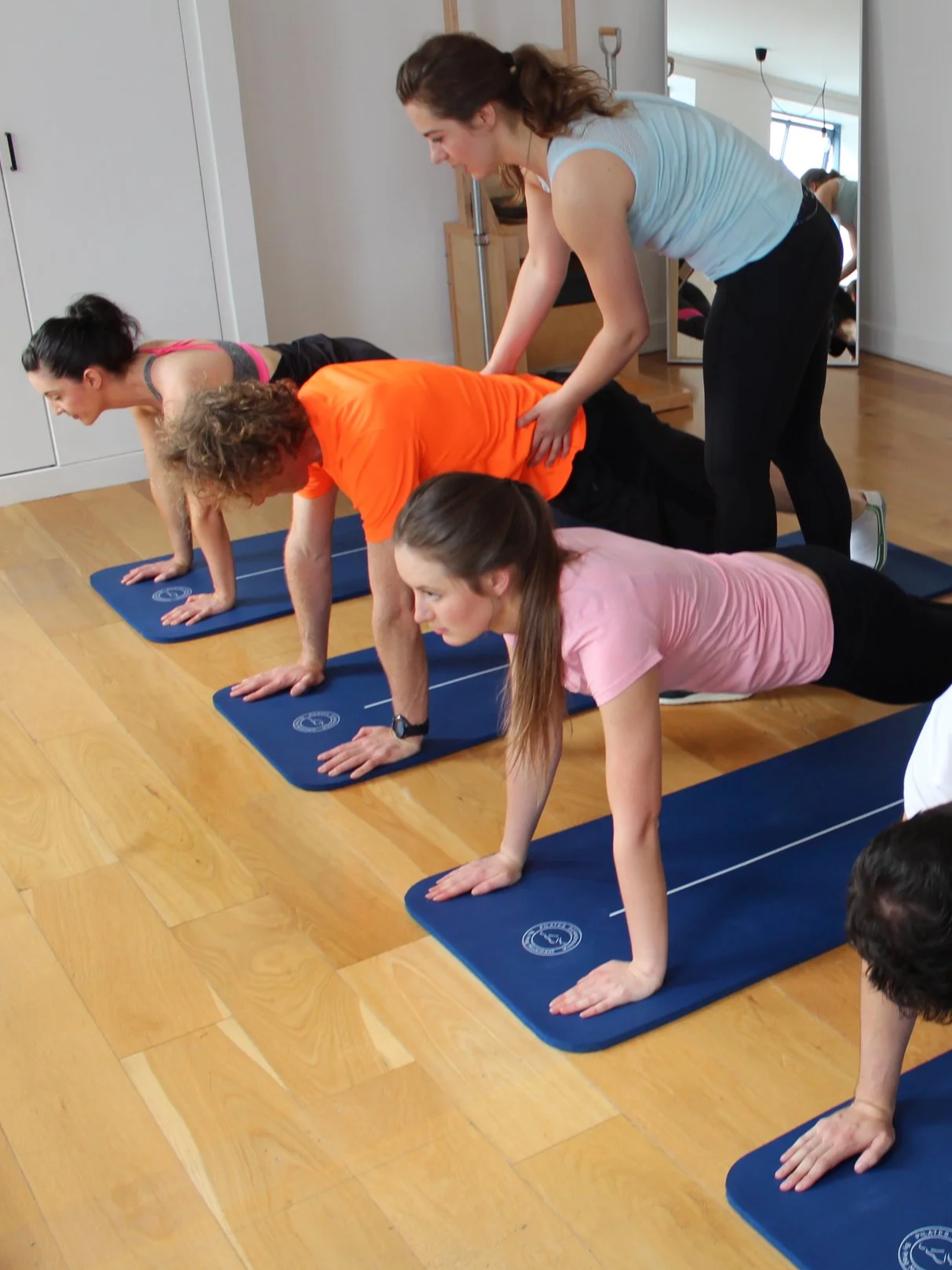
Classical Mat classes often stay relatively small — around 8–12 people or fewer — because its the optimal number for a teacher to attend to everybody - the teacher is watching, correcting and often using hands-on guidance, when welcomed. It is definitely possible to simplify & translate this work to a larger group. Whilst the benefits & fun of the learning experience still stand, certain nuances may be lost. If you are on a journey of recovering or improving strength or mobility in certain parts of your body then smaller group or one to one is very helpful.
Sometimes a hands on correction helps you understand something in your body that words alone simply can’t.
That’s part of what makes Pilates a learning experience, not simply a workout to follow along with.
A 600-Hour Training Programme Is Only the Beginning
As a teacher, you continue learning and expanding your collection of tools, exercises and concepts through: mentorship, continuing education, Pilates books, historical video archives, exercise charts, workshops, years and years of practice.
The learning never stops.
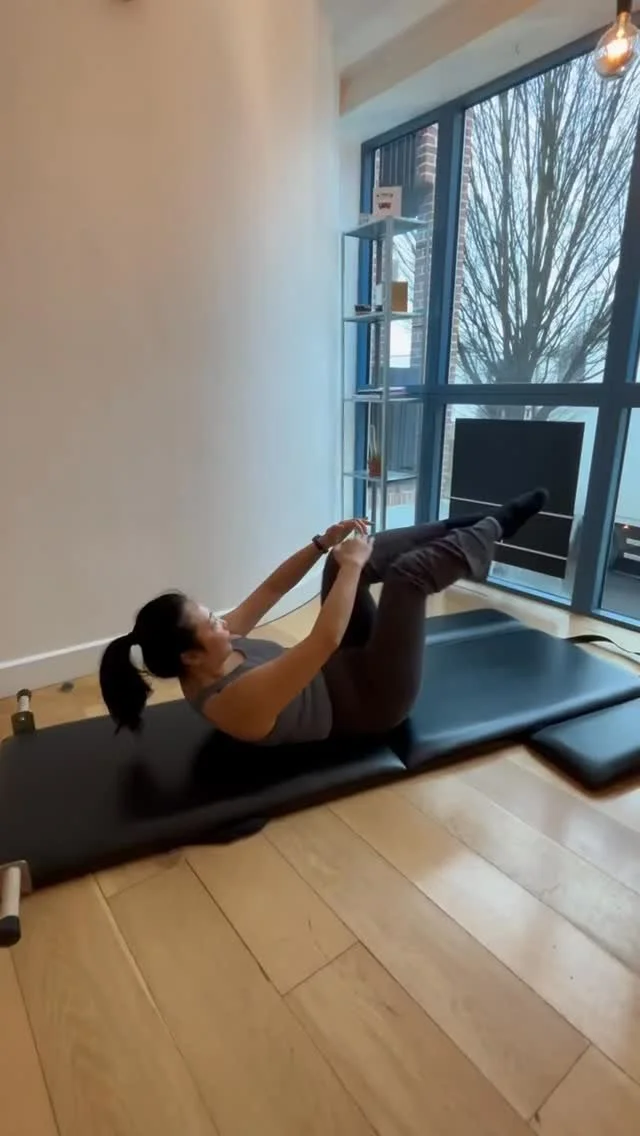
Pilates Hip Circles, by Minji
I’ve spent over 23 years helping people stay fit and healthy, and the last 13 years studying, practising and researching Traditional Pilates — Contrology — in different corners of the world. Something I feel incredibly privileged and grateful to have done. And still, there is so much more to learn. That’s part of the beauty of it.
Hundreds of exercises. Preparations and progressions. Connections and transitions. Teaching tools, apparatus and approaches. All connected through one extraordinary system.
This isn’t about Classical versus other styles of teaching. It’s about recognising just how much depth already exists within this body of work.
Stay curious. Keep your mind open. Keep learning.
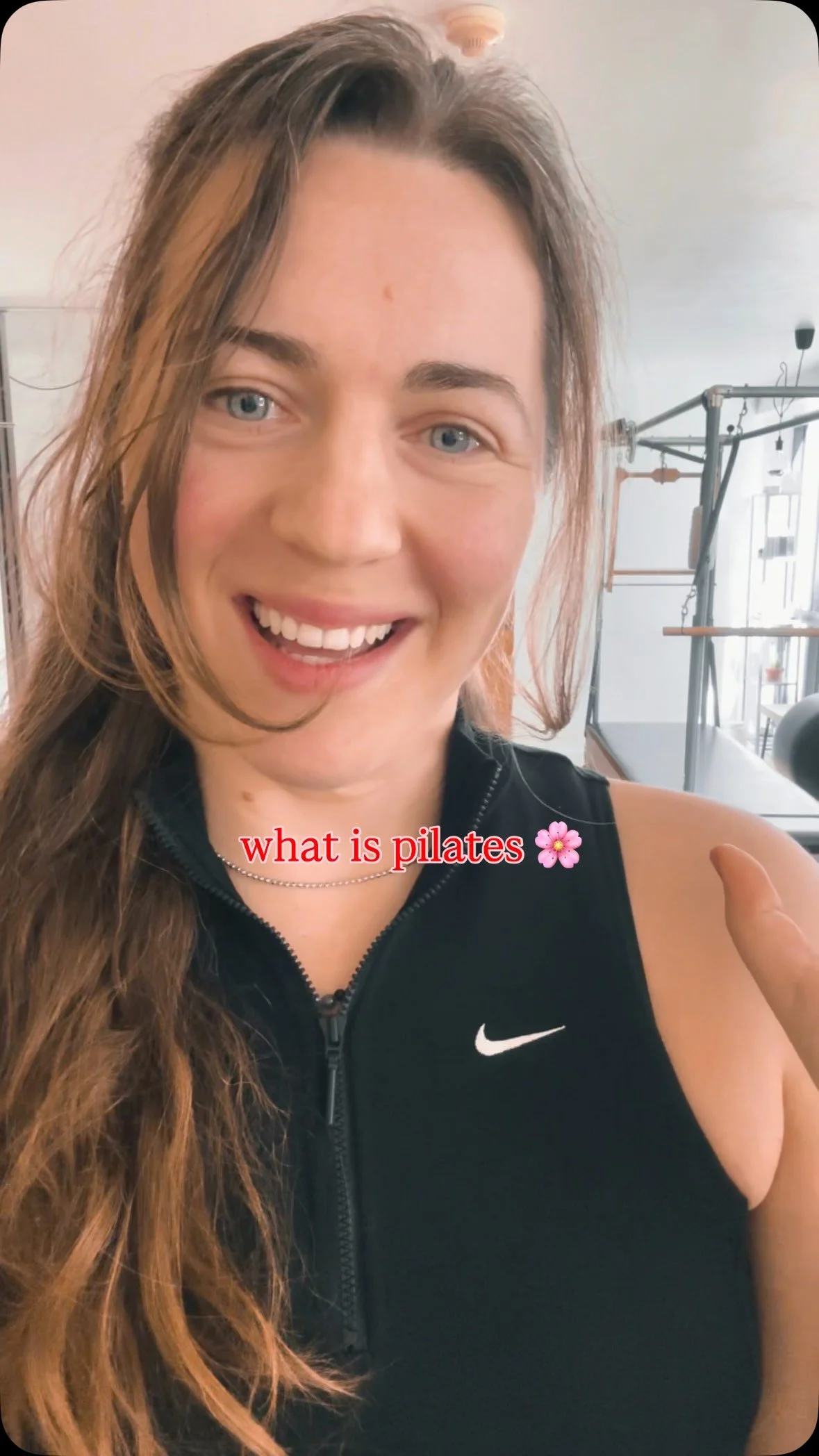
Written by Vlada Korolova, Pilates teacher & studio founder.
If you would like to try & learn Classical Pilates Mat we are launching new classes. We would love to have you join us for a class or a few! Details & booking link here.